Tag: Differences

Changing One’s “Spots” and Other Compromises

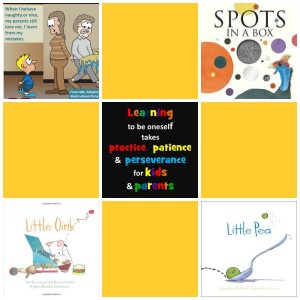
A slender and wiggly thread divides contrariness from being true to oneself. As our kids learn to discern the difference, we parents must deal with the confusion, frustration and—Dare we say it?—the irritation. Teaching our kids how to think for themselves, choose well and not follow the crowd takes patience and practice. Lots. And. Lots. Of. Patience. And. Practice. Theirs and ours!

Read Post »

Filling Your Child’s World With Color

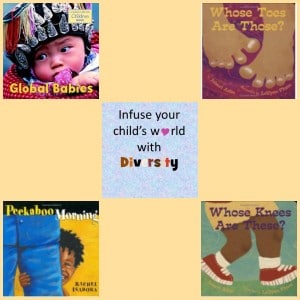
American Academy of Pediatricians advises parents to read daily to their children from birth! We can begin fulfilling this intentional commitment to diversity even when reading with our babies! These 4 delightful board books have universal appeal make a fabulous and important addition to the family library and help lay the foundation for multiculturalism early in a child’s life.

Read Post »
box metaphor

Boxing Kids In

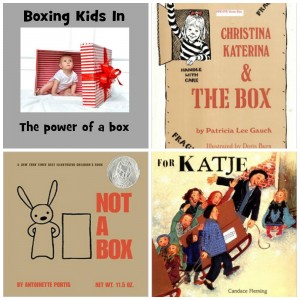
Nobody likes to be boxed in. But in this group of of three books, readers will discover the creative power that exists in the possibility of an empty box. Whether for fun or for a critical purpose like post-war relief, these stories feature children actively engaged in their own lives.

Read Post »

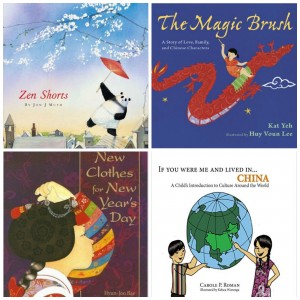
A Taste of Asia: Four Books That Expand Children’s Multiculturalism

AQ Lens: Beyond the obvious benefits of putting children in touch with their cultural roots, by their very existence these books send a message that these traditions are worth noting, following and showcasing. It is an easy step to carrying the same sense of value to a child’s roots. Coming from another culture makes one “different.” But it isn’t something to hide; it is something to share and honor. Readers will notice the effort and determination which the main characters demonstrate. Skills and capabilities grow out of hard work. This is a great message for them to absorb!

These books also demonstrate the universality of common daily activities: dressing, enjoying time with grandparents, preparing meals, celebrating holidays. As the reader follows the main characters through the narrative, children can note the value of self reliance, connection to family and of being part of a history–personal, familial as well as cultural. Children will enjoy learning about other cultures, whether it is part of their history or not. By expanding our children’s exposure to a variety of cultures and traditions, we better prepare them for life in this increasingly interconnected world. It is important for us to prepare them for this global citizenship.

Read Post »

Stick and Stone: A Story of Friendship

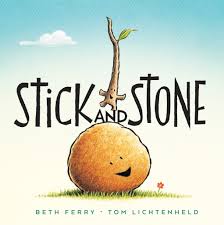
Sparse prose brilliantly captures the budding friendship of two solitary loners: Stick and Stone. They discover that everything is better when shared with a friend. Friends stick together, stand up for one another…Sparse prose brilliantly captures the budding friendship of two solitary loners: Stick and Stone. They discover that everything is better when shared with a friend. Lichtenfeld captures the depth and range of their friendship in simple, bright illustrations that pulse with warmth and coziness. When Stone is bullied by a mean and prickly pinecone, Stick comes to his defense, using his words not his fists. “Because that is what friends do.”

Stick’s intervention on behalf of his friend is a model for the power of one individual to make a difference. (Refer to last week’s blog The Power of One.) Stone is surprised by Stick’s brave gesture. Stick replies that is what friends do. Readers will connect with the moment of friendship in action, of loyalty and courage to speak up. Kids know what it is like to need that buddy. They also understand how challenging it can be to stand up against a bully. This story offers a chance to place themselves in both situations and imagine how they might feel, think and act. Later in the story, Stone has the opportunity to return the favor of friendship when he rescues his friend Stick. Again the refrain “That’s what friends do,” is repeated.

The AQ* Lens: We’ve all heard the adage, “Sticks and stones may break my bones but words will never hurt me.” We all know the fundamental untruth of this saying through direct personal experience. Words have immense power—to heal, to connect, to divide and to destroy. As adoptive parents we know we must prepare our kids to face the dreaded day/s when a rude remark about adoption, birth parents, being given away, etc.
Read Post »

The Power of One …

So often, kids (and adults) think, “I’m only one person. What difference can I make?” The power of one is deceptive. One quiet voice, one brave stance, one impassioned believer can shift the moment, the life, the course of history. Perhaps

Read Post »

From Follower to Leader

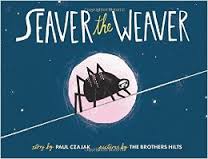
Seaver, the main character, is an orb spider who can’t or won’t follow the traditional round web patterns of his fellow orb spiders. They are outraged by his divergence from the traditional orb weaver patterns. The group threatens to ostracize Seaver. He’s torn between his need for acceptance and his pride in creation, not to mention the tasty morsels each of his creations manages to capture. Seaver resolves to change his independent ways. He agrees to conform after he savors his tasty meal.

Read Post »

Wanting to Be Different

Often we concentrate on identifying ways that our adopted children are like us. Commonality equates to connection. It is equally important, however, to notice, validate and encourage the differences which our children bring to the family. These add value, texture and variety and are an important part of them. These differences enrich our families; they do not diminish us. A Five Star read.

Read Post »

Helping Kids Size Themselves Up

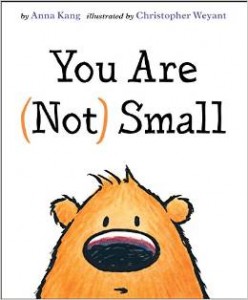
Children love to place their hands and feet beside a parent’s limbs and assert that they are almost as big as Mom or Dad. What I love about You Are (Not)Small by Anna Kang is that it taps into this touch point of childhood. With delightful illustrations by Christopher Weyant, it deftly and humorously, highlights that size is relative… He is both little and big!

Read Post »

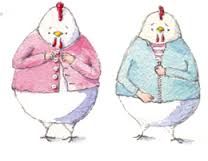
A Very Special Chicken Learns to Shine

Young readers will identify with Henny’s struggle to face and accept her personal differences as well as the differences in others. Many will want to talk about how kids can be kind or mean to each other. This could include discussion of bullying as well—how it feels, what to do, etc.

Read Post »