In the title of her excellent book, Who Is A Worthy Mother, Rebecca Wellington asks a pivotal question: Who is a worthy mother? Her well-documented research spotlights factors that usually remain unacknowledged or dismissed. A narrow and biased lens imbued the policies, beliefs, judgments, and decisions that saw adoption as the best solution. This bias determined which women society viewed as worthy to parent their children. By default, it also identified which women they advised/pushed to place their children for adoption.
When making these decisions, they gave little or no attention to the cultural norms and traditions of non-northern Europeans. Wllington’s analysis shows that often the desire to convert children and “civilize” children in ways that erased their cultures, family connections, and traditions. This agenda often held a higher priority than the children’s welfare and judged their mothers as not worthy mothers.
A viewpoint of adoption as totally benign
Infused the calculus of the “costs”/benefits that adoption conferred on a child was entrenched. It disregarded the life-long trauma to both birth mothers and adoptees and minimized the intense losses and grief they experienced. Society deemed adoption appropriate because the narrow lens of societal norms could not see these women as worthy mothers.
But of course, the losses of birth mothers and adoptees are far from trivial. Our support systems for and analysis of the criteria by which we determine who is a worthy mother need a substantive overhaul. We must prioritize the needs of mothers and their children over the yearnings and needs of prospective adoptive parents.
This book provides a much-needed historical perspective that exposes many uncomfortable truths about the motivations, policies, and practices that have shaped our cultural thoughts and beliefs about adoption, birth mothers, and adoptees. Everyone connected to adoption should read it.
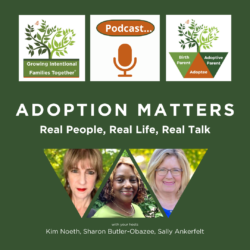
Listen to GIFT Family Services’ newest podcast, ADOPTION MATTERS: Real People. Real Life. Real Talk.
This podcast looks at the adoption experience through the eyes of three of our adoption coaches: Sharon Butler Obazee, an adoptee; Kim Noeth, a birth mother, and Sally Ankerfelt, an adoptive parent. Their conversations explore how one’s position in the adoption triad influences their experiences and responses.
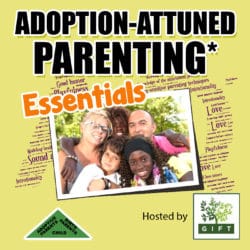
You can still listen to our original podcast, Essentials of Adoption Attuned Parenting for many informative and useful conversations.
 Every one of us knows the pain of separation from someone we love. Children experience maternal separation with particular pain. From the moment of parting through to the long-anticipated reunion, their emotions spin. You Weren’t with Me by Chandra Ghosh Ippen Is a lovely, tender book that addresses the tumultuous, intense and complex feelings that children confront when they are separated from their mother.